Kazakhstan is working on a mechanism for cross-country procurement of drugs
Published 07 October 2026
Last update 07 October 2026
68
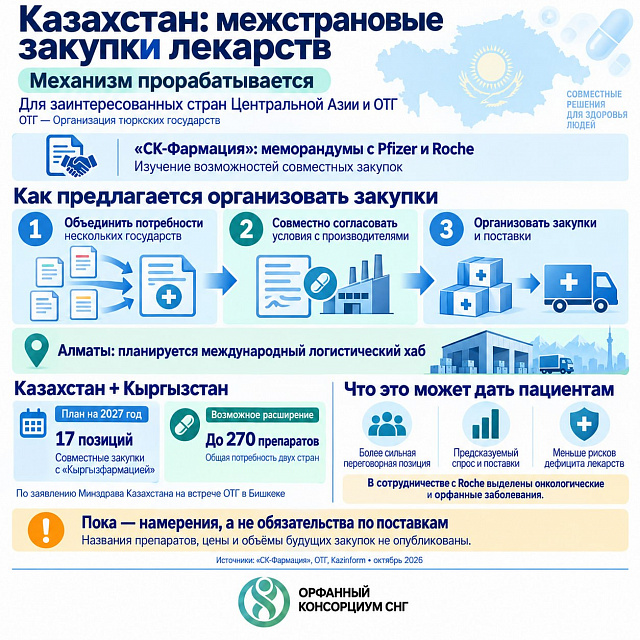
On 5 October 2026, Kazakhstan's single distributor "SK-Pharmacy" announced the signing of a memorandum with "Pfizer Kazakhstan" on the development of cross-country procurement of medicinal products.
Earlier, on 1 October, a similar document on cooperation with Roche was published.
The parties intend to work out joint procurement for interested countries of Central Asia and the Organization of Turkic States (OTS).
 What the Mechanism Envisages
It is proposed to consolidate the needs of several states and jointly agree on procurement terms with manufacturers.
According to SK-Pharmacy's assessment, consolidating volumes could improve price terms, increase supply predictability, and reduce the risk of drug shortages.
An international logistics hub in Almaty is planned to be established to organise supplies.
In the cooperation with Roche, access to drugs for the treatment of oncological and orphan diseases is specifically highlighted.
At the same time, the memoranda so far record the parties' intentions to work out a mechanism, rather than obligations for specific supplies. The names of drugs, prices, and volumes of future procurement have not been published.
 OTS Context
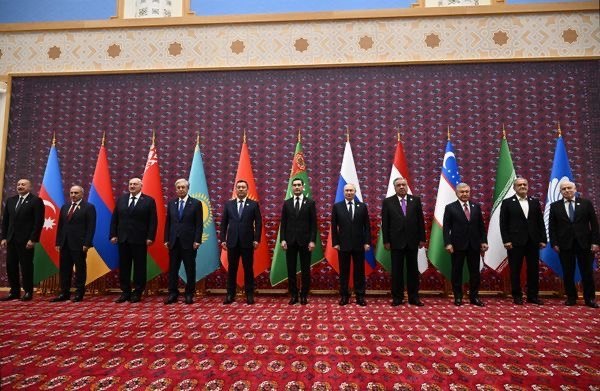
The development of intergovernmental procurement was also discussed on 2 October in Bishkek at the VI Meeting of Health Ministers of the OTS.
The meeting was attended by representatives of Kazakhstan, Kyrgyzstan, Azerbaijan, Turkey, and Uzbekistan. Following the meeting, a Joint Declaration was signed and an Action Plan on Cooperation in Healthcare for 2026–2027 was approved.
The Kazakh delegation proposed using the experience and infrastructure of SK-Pharmacy to consolidate the procurement of medicines and medical devices of the OTS countries.
According to the Minister of Health of Kazakhstan, in 2027 it is planned to begin joint procurement with "Kyrgyzpharmacy" for 17 items. In the future, expansion of cooperation to 270 drugs procured by both countries is being considered.
Additionally, Kazakhstan proposed accelerated registration of medicines between OTS states that have the third level of regulatory system maturity according to WHO assessment.
 Why This Matters
For rare diseases, cross-country procurement may be particularly significant.
The small number of patients in each individual country limits the negotiating position of the healthcare system and complicates the planning of supplies of high-cost drugs.
Consolidating the needs of several states could potentially increase demand predictability, strengthen negotiating positions, and reduce the risk of interruptions.
However, the practical significance of such a mechanism will depend on which drugs are included in joint procurement, how obligations will be distributed among countries, what price terms can be agreed upon, and how regulatory and logistical coordination will be ensured.
 Sources:
SK-Pharmacy — memorandum with Pfizer
SK-Pharmacy — memorandum with Roche
Organization of Turkic States — outcomes of the VI Meeting of Health Ministers
Kazinform
Earlier, on 1 October, a similar document on cooperation with Roche was published.
The parties intend to work out joint procurement for interested countries of Central Asia and the Organization of Turkic States (OTS).
What the Mechanism EnvisagesIt is proposed to consolidate the needs of several states and jointly agree on procurement terms with manufacturers.
According to SK-Pharmacy's assessment, consolidating volumes could improve price terms, increase supply predictability, and reduce the risk of drug shortages.
An international logistics hub in Almaty is planned to be established to organise supplies.
In the cooperation with Roche, access to drugs for the treatment of oncological and orphan diseases is specifically highlighted.
At the same time, the memoranda so far record the parties' intentions to work out a mechanism, rather than obligations for specific supplies. The names of drugs, prices, and volumes of future procurement have not been published.
OTS ContextThe development of intergovernmental procurement was also discussed on 2 October in Bishkek at the VI Meeting of Health Ministers of the OTS.
The meeting was attended by representatives of Kazakhstan, Kyrgyzstan, Azerbaijan, Turkey, and Uzbekistan. Following the meeting, a Joint Declaration was signed and an Action Plan on Cooperation in Healthcare for 2026–2027 was approved.
The Kazakh delegation proposed using the experience and infrastructure of SK-Pharmacy to consolidate the procurement of medicines and medical devices of the OTS countries.
According to the Minister of Health of Kazakhstan, in 2027 it is planned to begin joint procurement with "Kyrgyzpharmacy" for 17 items. In the future, expansion of cooperation to 270 drugs procured by both countries is being considered.
Additionally, Kazakhstan proposed accelerated registration of medicines between OTS states that have the third level of regulatory system maturity according to WHO assessment.
Why This MattersFor rare diseases, cross-country procurement may be particularly significant.
The small number of patients in each individual country limits the negotiating position of the healthcare system and complicates the planning of supplies of high-cost drugs.
Consolidating the needs of several states could potentially increase demand predictability, strengthen negotiating positions, and reduce the risk of interruptions.
However, the practical significance of such a mechanism will depend on which drugs are included in joint procurement, how obligations will be distributed among countries, what price terms can be agreed upon, and how regulatory and logistical coordination will be ensured.
Sources:SK-Pharmacy — memorandum with Pfizer
SK-Pharmacy — memorandum with Roche
Organization of Turkic States — outcomes of the VI Meeting of Health Ministers
Kazinform