Integration of care for rare diseases: multidisciplinarity, continuity, coordination II CIS Orphan Forum | Moscow, June 27, 2025
A session was held on the integration of medical care for rare diseases - one of the key topics for a sustainable healthcare system.
The participants discussed how to ensure continuous and coordinated patient care - from neonatal screening to adult services, from primary care to specialized centers.
Integration can be different:
- Transitional - when transferring a patient from a pediatric service to an adult one
- Geographical - when organizing interaction between regions and national centers
- Vertical — from a polyclinic to high-tech care
- Multidisciplinary — coordinated work of doctors of different profiles.
Moderator:
- Zaure Dmitrievna Dushimova,
Chief freelance specialist of the Ministry of Health of the Republic of Kazakhstan for adult orphan diseases.
She emphasized that the discussion of these forms of integration is a sign of the maturity of the healthcare system. In Kazakhstan today, more than 2/3 of patients with orphan diseases are adults, many of whom have transferred from children's services thanks to new treatment methods. This requires institutional solutions and clear routing. - Dilorom Ilkhamovna Akhmedova,
Professor, Chief Pediatrician of the Republic of Uzbekistan,
spoke about the construction of a comprehensive system based on the Center for Maternal and Child Health.
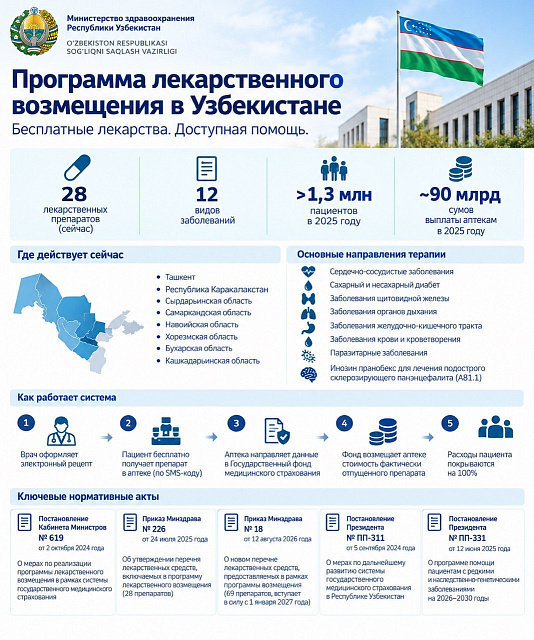
A model of geographic integration has been implemented in Uzbekistan:
- Screening centers in the regions are connected to the republican center, where the results are centrally received and from where assistance is organized
- Patients with phenylketonuria and congenital hypothyroidism receive nutrition and medications at their place of residence - with the participation of the Healthy Generation Foundation.
Model of multidisciplinary support implemented in the programs:
- cystic fibrosis,
- juvenile arthritis,
- bullous epidermolysis.
The teams include: pulmonologists, gastroenterologists, neonatologists, nutritionists, surgeons and dermatologists. Patients are observed in regional centers, but under the methodological and coordinating guidance of the republican level.
The problem of transition to adult service remains relevant:
- in many cases, patients are still under the supervision of pediatric specialists.
- But in a number of areas (hemophilia, thalassemia) - a model of interaction between children's and adult services has already been built.
More than 2,100 patients with hemophilia are registered in the country, of which 798 are children.
This session once again confirmed: without coordination between levels, ages and specialists, it is impossible to provide continuous and high-quality care to patients with rare diseases.